NEW MEMBER OFFER: 1 week UNLIMITED CLASSES for $39 + HST

What HYROX Toronto is, what happened at the 2026 race, how to find the next one, and how to train through winter and review your splits after race day.
Book your first classIf you searched "HYROX Toronto", you probably want one of three things: the dates of the race, how to get into the next one, or how to be ready when it comes. Here's the short answer. GoodLife HYROX Toronto 2026 ran October 1 to 4, 2026, at the Enercare Centre at Exhibition Place. As of early October 2026, HYROX hasn't listed a 2027 Toronto date, so the official race finder is the place to watch.
The rest of this guide covers what the race asks of your body, how to train for it through a Toronto winter, and what to do with your results if you just raced. If you want the full training plan, we've written that separately in our HYROX training guide. This page is the Toronto-specific companion.
HYROX is an indoor fitness race with the same format at every event worldwide: eight 1 km runs, each followed by one workout station. Because the course and standards are fixed, a time in Toronto compares directly with a time at any other HYROX race. That consistency is the main reason people get hooked. You can race, see exactly where you lost time, train it, and race again.
The Toronto race, officially GoodLife HYROX Toronto, is held in an exhibition hall rather than on the street. You run laps of an indoor course, pass through the Roxzone (the transition area between the run course and the stations), do your station, and head back out. Anyone 16 or older on race day can enter, and no qualifying time is needed, according to the official 26/27 singles rulebook.

The official event page lists GoodLife HYROX Toronto as a four-day event, Thursday October 1 to Sunday October 4, 2026, at the Enercare Centre, 100 Princes' Blvd. Exhibition Place listed the same dates and venue.
The schedule spread these divisions across the four days:
A couple of details from the event page are worth remembering for next time. Exhibition GO Station is about a 7-minute walk from the venue, and the 509 and 511 streetcars stop about 5 minutes away, which beats hunting for parking on race morning. Race photos are sold through Sportograf, which uses facial recognition to match photos to your bib, roughly 48 hours after the race.
We won't guess at a 2027 date, and you shouldn't trust anyone who does until HYROX publishes it. Here's how to stay ahead of it:
The stations, in order, from the official race format page, with Open weights for women and men:
Pro moves women up to the men's Open loads and gives men heavier ones again (202 kg sled push, 9 kg wall ball). Add the eight runs and you have 8 km of running, though the rulebook notes each 1 km may be split into several laps depending on the venue. Miss a lap and the timing chip catches it, with a time penalty per lap.
From what we see in training, three things cost new racers the most:
On the sled, arms long, hips low, and drive the floor away behind you. If your hips are higher than your shoulders, you're pushing with your back, not your legs.

A spring race means your key training months are December to March. That's a problem if your plan depends on outdoor running. Ice, slush and early darkness make hard interval sessions outside risky and inconsistent. Here's how we'd handle it.
Do your intervals and race-pace work on a treadmill set to a 1% incline, where footing is predictable and you can hit exact paces. Save outdoor runs for easy, conversational efforts where slowing down on a bad patch of sidewalk doesn't ruin the session. Dress in layers, wear shoes with grip, and pick routes that get cleared.
This is a starting point for someone who already trains three or four times a week. The training guide covers progressions in more detail.
Every time you go from a station back to running, your legs feel heavy for the first 200 to 300 m. You can't avoid that, but you can get used to it. Finish station circuits with a short run so the change feels familiar by race day.
Leave the station at a jog you could hold for ten minutes. Your pace will come back by the first lap marker.
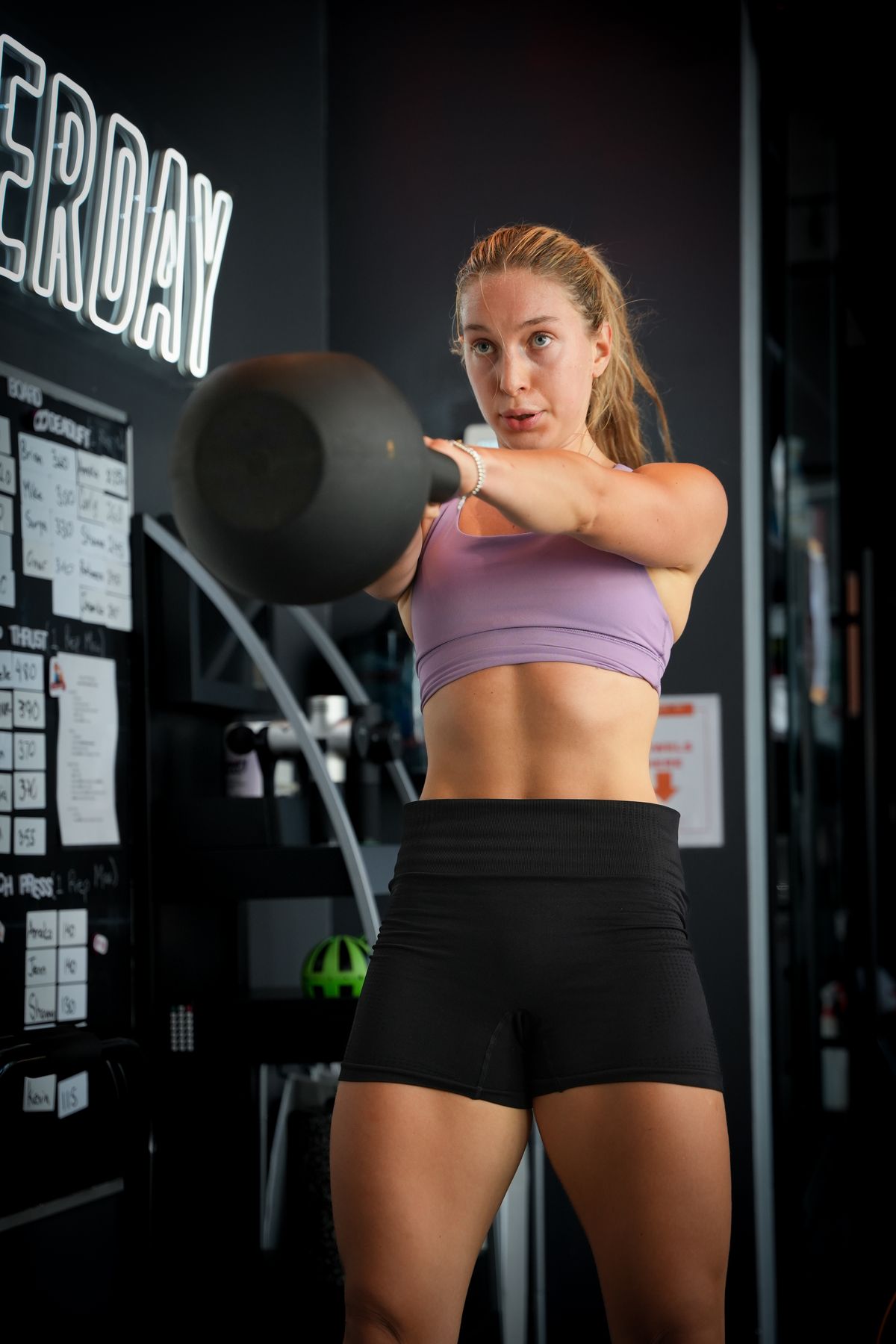
At Fit Factory, our group class schedule includes HYROX Conditioning and HYROX Strength, plus Hybrid 60 and Hybrid 75. HYROX Conditioning takes you through four of the eight HYROX stations, including the SkiErg, rowing, dumbbell lunges and burpee broad jumps. Classes run at both our Downtown (373 King St W) and Midtown (161 Eglinton Ave E) locations, so the sled and wall-ball work in that sample week doesn't depend on the weather.
If you raced at the Enercare Centre this week, congratulations. Here's what to do with the next month.
Expect sore legs from the sleds and lunges for a few days. Keep moving with walks, easy cycling or light rowing, sleep well, and eat enough. You don't need to train hard for at least a week. If something hurts in a sharp or localized way rather than a general ache, get it checked by a physiotherapist or doctor before you start loading it again.
Search your name on the official HYROX results site and pull up your race. Don't just look at the finish time. Look at:
Write down one running weakness and one station weakness. Those two things become your next training block.
Go back to strength work and easy aerobic volume before you add race-pace sessions. Then choose your next race on the HYROX race finder and count back. A spring race gives you roughly six months, which is plenty to change both of the weaknesses you found.
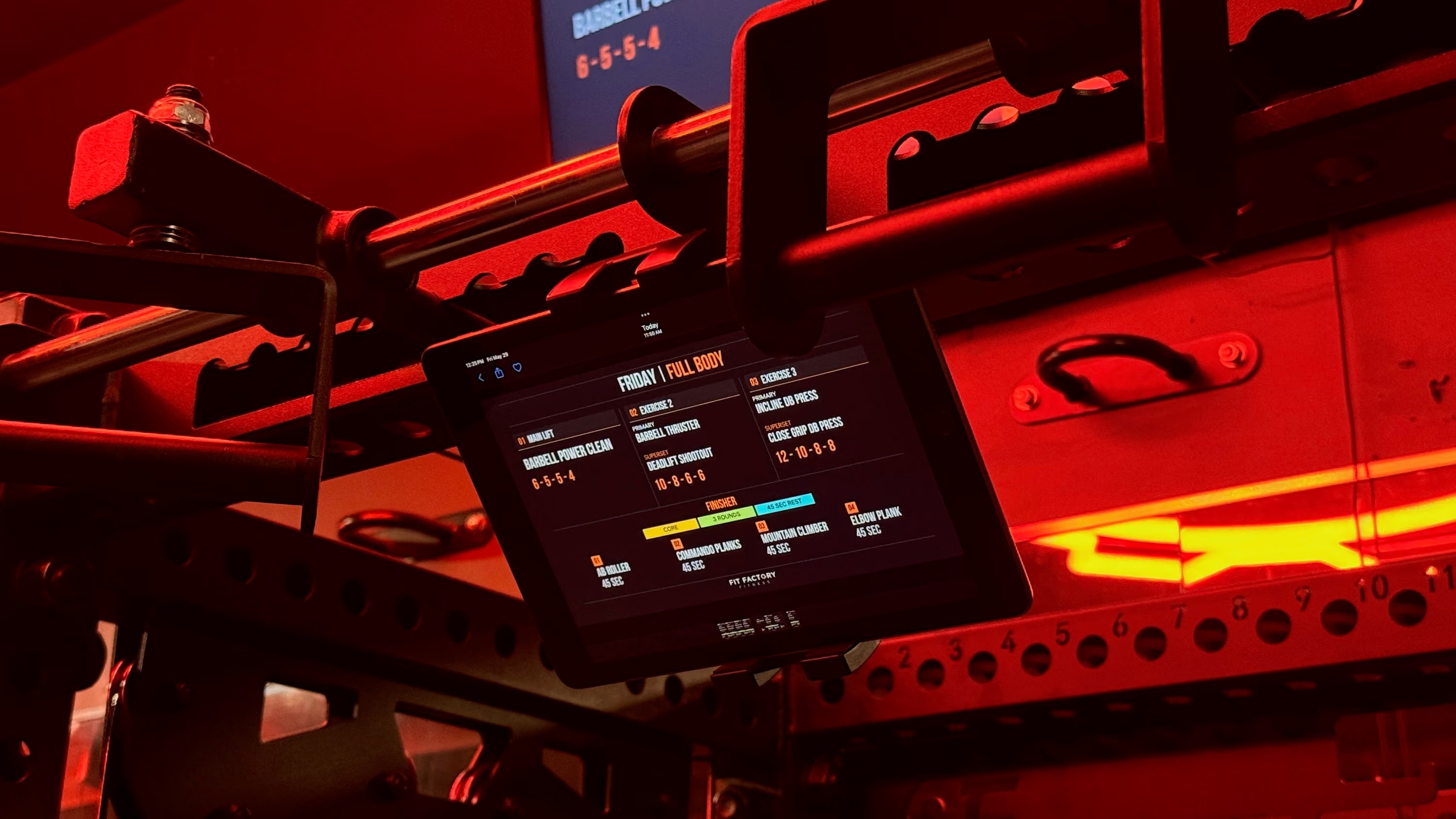
The best way to know whether your training is working is to race the format before race day. Fit Factory is an official HYROX gym, and we host full HYROX simulations at our Downtown location. We've run seven so far, and the last two sold out with more than 100 athletes each. They use the official format, with electronic timing, race-standard equipment and a live leaderboard. You get a full set of splits to compare against your last race, without the travel. The next date will be posted on the simulations page, along with entry categories (Solo, Doubles and Relay).
Your next step is simple: book a HYROX Conditioning or HYROX Strength class this week and see where you are. If you're new to Fit Factory, start with the $39 + HST intro week of unlimited classes at Downtown or Midtown, then visit our HYROX training page to plan your road to the next race.
Everything you need to know about memberships, HYROX training, personal coaching, group fitness classes, and getting started at Fit Factory Toronto.
Start Your 1 week TrialFit Factory gym welcomes new members of all fitness levels with strong, open arms. No matter your fitness level, we got you.